Beyond Simple Supply Chain Politics
When Australia’s Critical Minerals Facilitation Office announced partnerships worth $23.8 billion with Japan, South Korea, and the United States in February 2026, most people focused on the economics and trade angles. But this isn’t just another resource deal. We’re watching the birth of “mineral diplomacy,” where countries turn their underground treasures into tools of international influence.

The alliance works on several levels at once. On the surface, it’s about cutting dependence on Chinese rare earth supplies and building backup supply chains for critical tech. Look closer, and you’ll see an attempt to rewire Pacific power relationships through resource interdependence. The deepest layer? Countries are turning geology into geopolitical weapons, reshaping how regional security actually works.
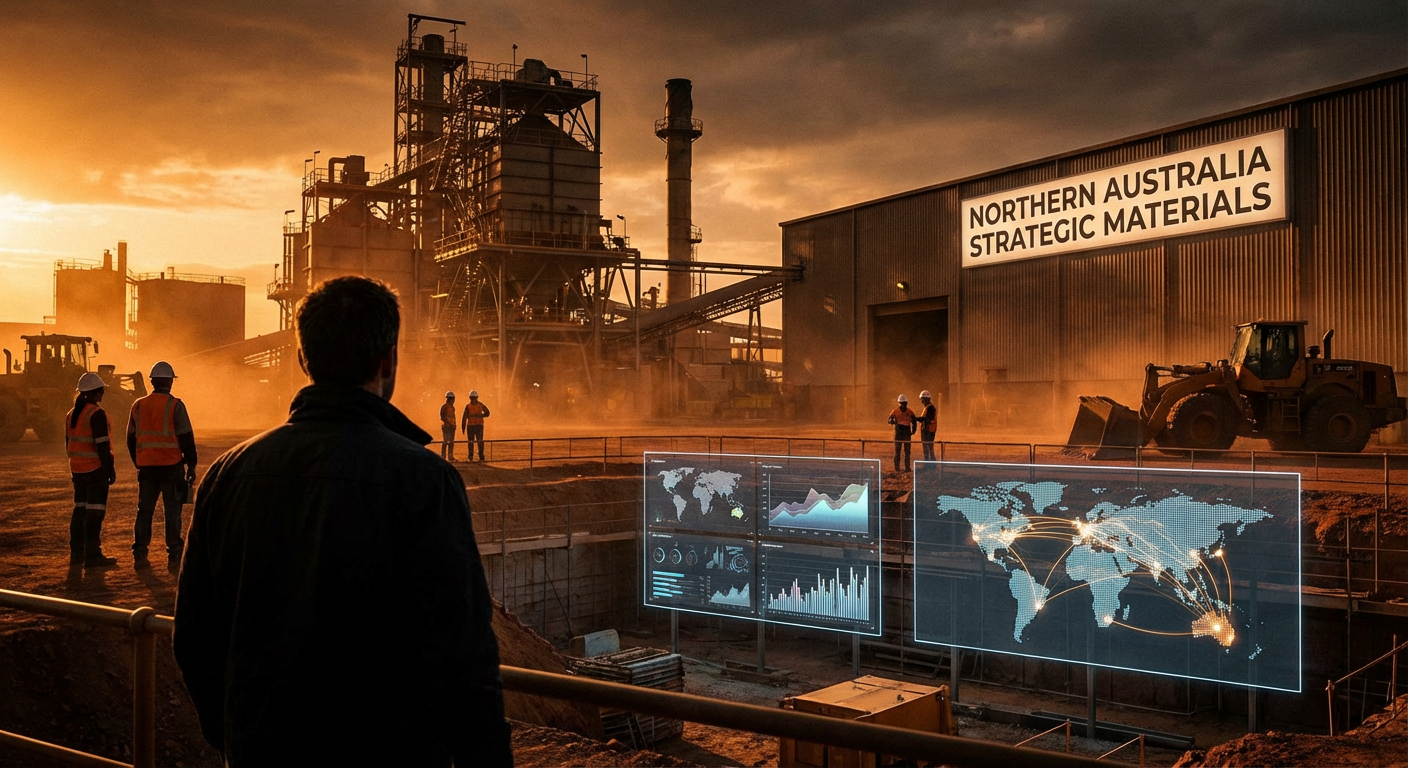
This gets complicated because rare earth elements occupy a weird spot in global politics. These materials are everywhere in the earth’s crust, yet they’re concentrated in specific, politically charged locations. Processing them requires massive technical know-how and environmental tolerance that only a few nations have. When Defense Minister Richard Marles said Darwin’s rare earth facilities will supply 40% of allied semiconductor manufacturing by 2028, he wasn’t just announcing a factory. He was describing critical strategic infrastructure.
The Mechanics of Mineral Statecraft
To understand how this alliance actually works, you need to grasp the relationship between rocks, tech, and power projection. The Australian Government Critical Minerals Strategy isn’t just about digging stuff up. It’s a blueprint for resource-based alliance architecture. Australia has serious deposits of lithium, cobalt, and rare earths, but more importantly, it offers geographic positioning for secure processing and transport to key allies.
The alliance’s structure shows sophisticated thinking about supply chain vulnerability. Instead of just finding new suppliers, member nations are building backup processing capabilities across multiple countries while keeping shared technical standards and security protocols. Papua New Guinea’s Prime Minister James Marape recently announced PNG’s intention to join, potentially adding 15% to global cobalt supply chains. That move shows how smaller Pacific nations can use their resource wealth for strategic positioning within this new framework.
China’s response tells you everything about the alliance’s strategic importance. Beijing’s Ministry of Commerce slapped export licensing requirements on 17 critical minerals, hitting $4.2 billion in Australian imports. This wasn’t just economic payback. It was recognition that the alliance threatens China’s ability to use rare earth dominance as a geopolitical weapon. The licensing requirements are an attempt to maintain control over supply chains even as alternative networks develop.
Recalculating Pacific Influence
The alliance’s impact on Pacific power dynamics goes way beyond its immediate members. Regional influence used to flow from military presence, economic investment, and diplomatic relationships. Now we’re seeing resource-based influence networks that cut across those traditional categories. Nations with critical mineral deposits suddenly find major powers courting them for supply chain security, while those without such resources face pressure to pick sides in an increasingly divided system.
Research from the Lowy Institute Pacific Analysis suggests Australia’s rare earth strategy could cut Chinese market dominance from 85% to 65% by 2030. Those aren’t just market statistics. They represent a fundamental shift in who has leverage. As Chinese dominance weakens, space opens for new forms of Pacific cooperation that don’t revolve around Beijing’s Belt and Road initiatives or Washington’s traditional alliance structures.
The geographic implications are huge. Darwin’s processing facilities create a new strategic node in northern Australia, while PNG’s participation extends the alliance’s reach into Melanesia. This isn’t accidental. It reflects conscious effort to create alternative resource flows that bypass traditional chokepoints and reduce vulnerability to Chinese pressure. The alliance is literally rewiring the Pacific’s resource geography.
The Complexity of Strategic Autonomy
Maybe the most interesting part of this development is how it complicates traditional ideas about strategic autonomy. Australia has long tried to balance security dependence on the United States with economic relationships across Asia. The critical minerals alliance seems to offer a path toward greater strategic autonomy, not through isolation, but by creating new forms of interdependence that Australia helps design and control.
But this apparent autonomy comes with its own chains. The alliance’s success depends on maintaining tech cooperation with allies, following shared security protocols, and accepting limits on how critical minerals can be used and traded. Australia gains influence over supply chains but gives up some freedom in how those chains operate. This is sophisticated strategic binding: accepting certain constraints to gain greater influence over the broader system.
The environmental and social dimensions add another layer of complexity. Critical mineral extraction and processing carry serious environmental costs, while the alliance’s security requirements may limit transparency and community consultation around mining projects. These tensions haven’t been fully resolved and may become more prominent as the alliance expands and mining operations scale up.
Toward a New Pacific Order
The critical minerals alliance is something genuinely new in Pacific geopolitics: a resource-based security arrangement that doesn’t fit existing categories of alliance, trade bloc, or strategic partnership. Its success or failure will likely determine whether similar arrangements emerge around other critical resources, from battery materials to semiconductor substrates. We might be watching the birth of a new form of international organization built around shared resource vulnerabilities and technological interdependencies.
The alliance’s real significance may not lie in its immediate economic or strategic outcomes, but in proving that middle powers can actively reshape regional order through creative use of their resource wealth. If it works, it provides a template that other nations with critical resources might adapt for their own strategic purposes. The Pacific’s future may be written not just in military deployments and trade agreements, but in the geology of critical minerals and the politics of processing facilities.
As these dynamics keep evolving, understanding their implications requires attention to both immediate policy developments and longer-term structural changes in how nations think about security, resources, and regional order. The story of Australia’s critical minerals alliance is still being written, with consequences that will likely extend far beyond the Pacific region itself.
