The Pendulum Swings Back to the States
We’re watching something pretty remarkable happen in American politics. While Congress has been locked in gridlock for the past two decades, state legislatures have quietly become the real engines of policy change. This reminds me a lot of the early days of the Republic between 1787-1820, when states did most of the heavy lifting on democratic experimentation while the federal government stayed deliberately small and hands-off.
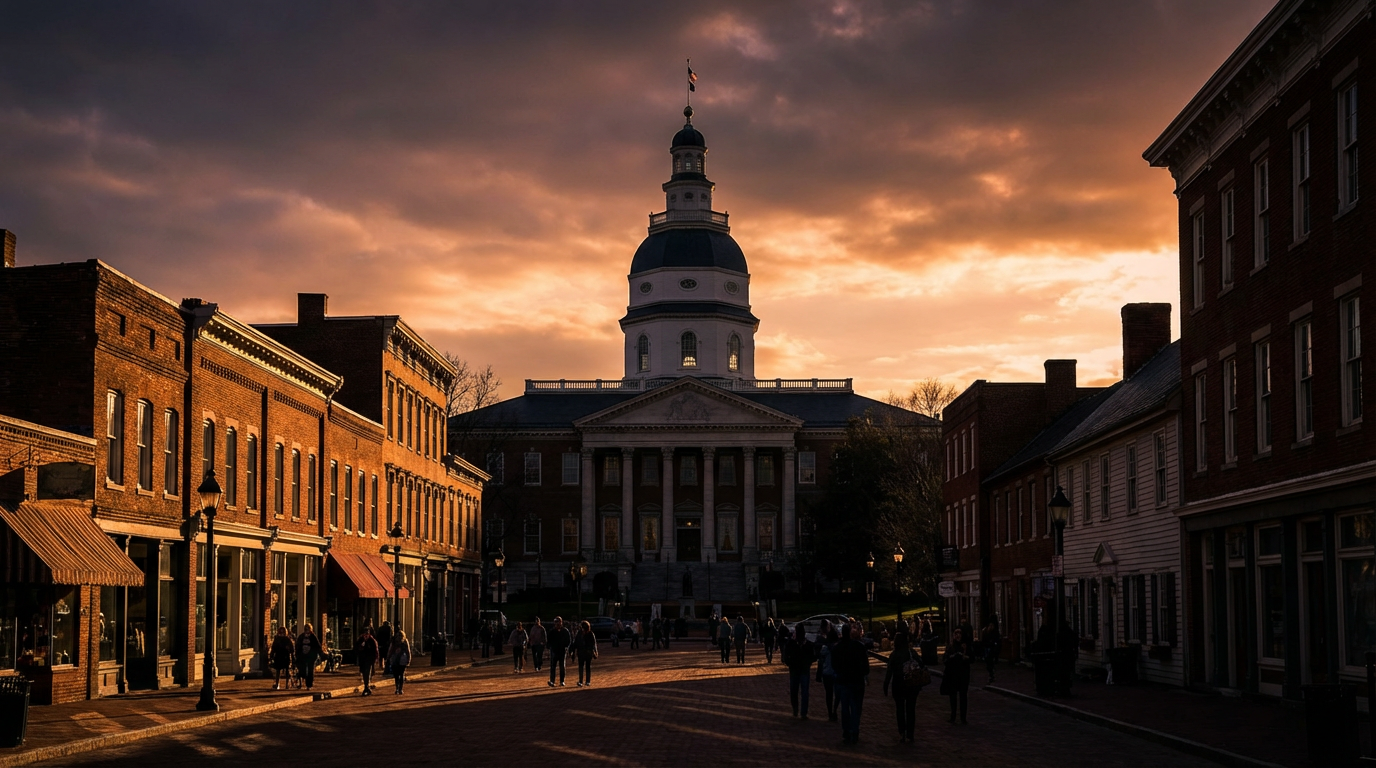
The numbers are pretty wild when you look at them. According to the National Conference of State Legislatures, state governments cranked out over 40,000 pieces of legislation in 2023 alone. Everything from AI regulation to housing policy. Congress? They managed just 27 bills worth mentioning that same year. This isn’t just about efficiency. It’s a complete rebalancing of how American federalism actually works. I think James Madison would recognize what’s happening here, even if the issues themselves would blow his mind.
But here’s the thing about comparing today’s state activism to the early Republic: the similarities are real, but so are the differences. Back then, states ran their own show mostly because the federal government literally couldn’t do much else. The Constitution didn’t give Washington the authority, and they didn’t have the infrastructure anyway. Today’s state activism happens within a massive federal bureaucracy that’s just… stuck. That creates a much weirder dynamic of cooperation, competition, and sometimes outright rebellion.

Local Governance as Democratic Innovation
What really gets me excited is how local governments have become test kitchens for democracy itself. It’s the same pattern we saw with New England town meetings influencing state constitutions in the 1780s. Now we have cities experimenting with participatory budgeting, ranked-choice voting, and citizen assemblies, and these ideas are bubbling up to reshape how states run elections and make decisions.
Look at ranked-choice voting. It started small in places like Cambridge, Massachusetts, then Maine went all-in for state elections, and now over 20 states are either using it or seriously considering it. That’s exactly how written constitutions spread in the 18th century. Local experiments that worked became templates everyone else copied.
But modern cities face constraints that Revolutionary-era towns never had to deal with. Today’s municipal innovators have to navigate layers of state and federal regulations, court orders, and funding requirements that can kill good ideas before they get started. Early American towns had more freedom partly because nobody higher up the food chain cared enough to micromanage them. Now everyone has an opinion about everything.
The scale difference is mind-bending too. When those Revolutionary towns tried new democratic procedures, they were dealing with maybe a few hundred people max. A modern city implementing participatory budgeting has to handle hundreds of thousands of residents. You need apps, data systems, and logistical planning that completely changes what democratic participation even means.
Federal Disengagement and State Opportunity
Here’s where the historical parallel gets really interesting. During the early Republic, states filled policy gaps because the federal government was supposed to be limited. Today, states are filling gaps because the federal government can’t get its act together. Different causes, but the practical results look surprisingly similar.
Climate policy is the perfect example. Congress has been basically useless on comprehensive climate action, so states like California, New York, and Washington built their own cap-and-trade systems and renewable energy requirements. These state programs now drive the national conversation the same way early state experiments with banking and education shaped federal debates before the Civil War.
But the stakes are completely different now. When 19th-century states tried different banking laws, failure mostly hurt their own citizens and economy. Today’s state climate policies operate in a global system. Screw up, and you’re affecting international markets and planetary systems. Get it right, and you need to scale up fast or it won’t matter.
Plus, modern states are dealing with economies and populations that move around constantly. California sets emissions standards that affect automakers in Michigan and oil companies in Texas in real-time. Old-school state banking regulations could never touch that level of immediate, cross-border impact.
The Limits of Historical Comparison
I love these historical parallels, but they only take you so far. The early Republic was mostly rural, agricultural, and slow-moving. Information took weeks to travel. Economic connections were limited. Today we’re dealing with global financial markets, instant communication, and urban-dominated politics that create completely different pressures.
The Constitution itself has changed in ways that make direct comparisons tricky. The 14th Amendment, civil rights laws, and decades of Supreme Court decisions created federal oversight that early states never had to worry about. Modern state innovations have to pass federal constitutional tests that didn’t exist in 1800. That fundamentally changes how experimentation works.
And then there’s partisan polarization, which is probably the biggest difference. Early American politics had plenty of nasty factional fights, but today’s level of geographic partisan sorting means state policy innovations often become ideological warfare instead of pragmatic problem-solving. Early states could try different approaches to the same problem without treating it like a battle for the soul of America.
Implications for Democratic Governance
So what does all this history tell us about where we’re headed? The current prominence of state and local governance is both exciting and worrying. Yes, states and cities can be laboratories of democracy, testing new solutions and providing models for everyone else. But they’re operating within constraints and connections that require real federal coordination to work properly.
The best parts of today’s state activism mirror what worked in the early Republic: genuine innovation driven by local needs and democratic engagement. The concerning parts reflect the limitations history reveals: policy fragmentation, interstate conflicts, and the challenge of scaling local solutions to address global problems.
The real question isn’t whether states should keep playing this prominent role. They will, because someone has to govern. The question is how federal institutions can actually engage with state innovation instead of just reacting to it or retreating into dysfunction. History suggests that periods of intense state activism eventually need federal coordination to stay sustainable and effective.
What aspects of contemporary state and local governance do you think most closely parallel early American federalist experiments? I would welcome your thoughts on how historical context might inform our understanding of current democratic innovations and their potential for broader application.
